



A significant portion of unprofitable play among beginners stems directly from poor preflop decision-making and improper card selection. Choosing to enter pots with weak or dominated holdings puts players at a distinct disadvantage long before community cards reach the board.
Understanding the mechanics of starting hand selection serves as the primary barrier between recreational players and consistent long-term winners.
In this comprehensive guide, we will analyze the best starting hands in poker, examine a structured poker starting hands ranking by tiers, provide actionable positional guidance, and break down complete strategy framework charts to optimize your preflop execution.

What are Starting Hands in Poker?
In Texas Hold’em, starting hands consist of the two private hole cards dealt face down to each player at the beginning of a round. These initial cards are combined with five community cards dealt across the flop, turn, and river to form the final five-card hand at showdown.
Selecting the right poker starting hands is the foundation of a healthy win rate because preflop choices dictate your positional leverage and postflop equity. Highly skilled players fold the majority of their dealt hands, voluntarily entering pots only when their starting cards offer a high mathematical expectation of profit.
How Many Starting Hands are there in Poker?
Mathematically, a standard 52-card deck produces a vast array of initial card combinations, though strategic categorization drastically simplifies preflop study:
- 1,326 Total Specific Combinations: Calculating every specific combination of suits and ranks yields 1,326 total dealt possibilities.
- 169 Unique Strategic Hands: Ignoring specific card suits, Texas Hold’em features 169 unique starting combinations, comprising 13 pocket pairs, 78 suited hands, and 78 offsuit hands.
- Suited vs Offsuit Equality: Prior to the flop, suit designations carry identical equity value; holding Ace of Hearts and King of Hearts provides the exact same starting strength as holding Ace of Spades and King of Spades.
Top 10 Poker Starting Hands
1. Pocket Aces (AA)
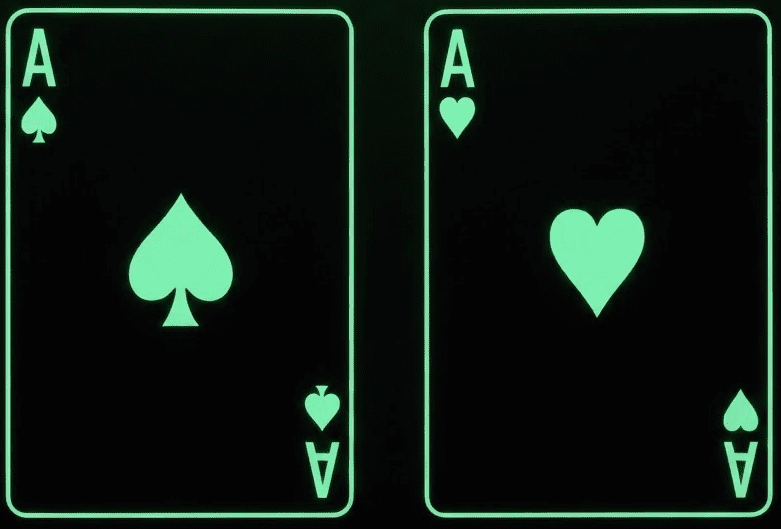
Pocket Aces, often referred to as pocket rockets or bullets, represent the absolute premier starting holding in Texas Hold’em. Dealt once every 221 hands (0.45% probability), Pocket Aces hold an approximate preflop win rate of 85% against a random hand in heads-up play. Players should open raise or 3-bet aggressively preflop to build the pot and isolate opponents, while avoiding over-passive play or slow-playing in multi-way pots where equity drops significantly.
2. Pocket Kings (KK)
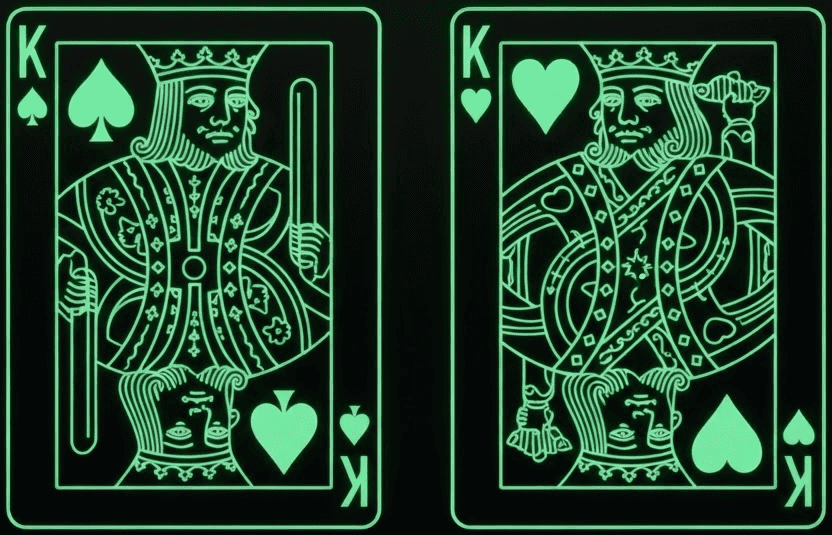
Known as cowboys, Pocket Kings rank as the second strongest holding in the game with a preflop equity of roughly 82% against random hands. Appearing at the identical 0.45% frequency, Kings represent an incredible opportunity to construct massive pots before the flop. The main hazard when holding Pocket Kings is an Ace appearing on the flop, requiring careful postflop pot control if an opponent exhibits heavy resistance.
3. Pocket Queens (QQ)
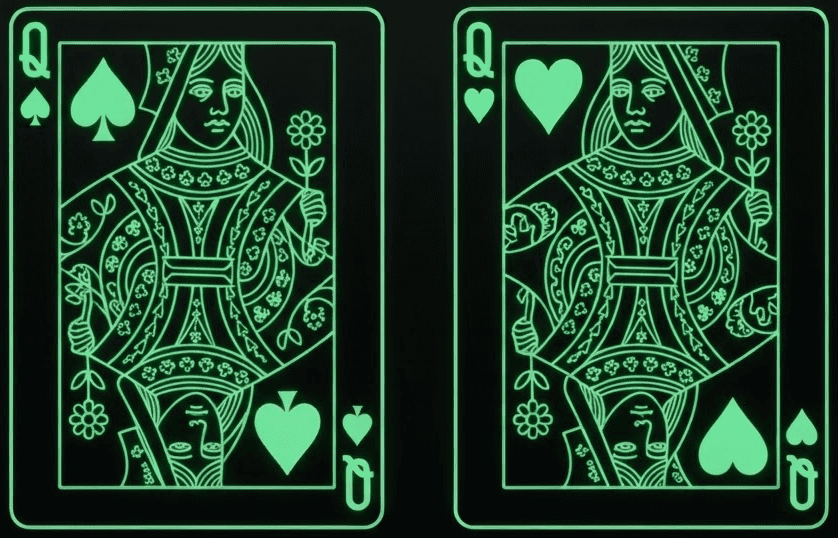
Pocket Queens, commonly called ladies, represent a powerful premium hand that wins approximately 80% of the time against random hole cards preflop. With a dealt frequency of 0.45%, Queens consistently dominate weaker pocket pairs and broadway combinations. However, players must navigate flops containing Aces or Kings cautiously, evaluating whether an opponent’s heavy 4-betting range has Queens dominated.
4. Ace-King Suited (AKs)
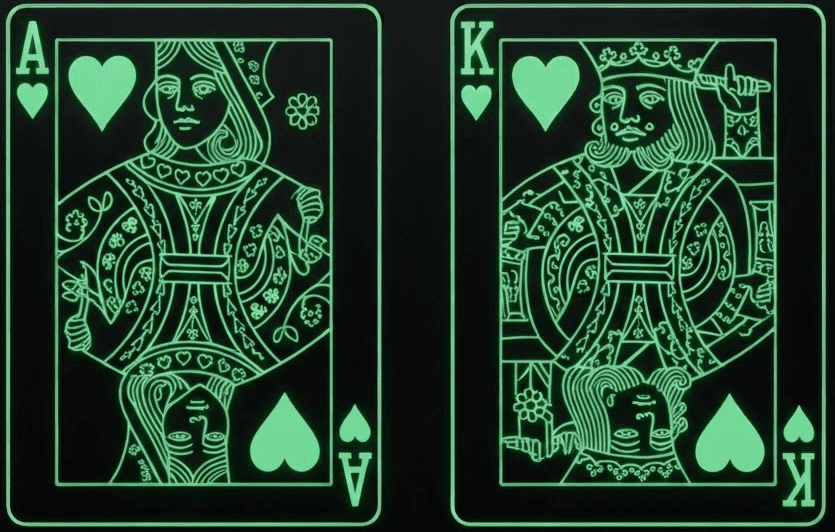
Referred to as Big Slick suited, Ace-King suited is the top drawing combination in poker, carrying roughly 67% equity against random starting holdings. While not yet a made pair, AKs appears with a 0.3% probability and offers immense versatility due to its ability to flop top pair with top kicker, nut flushes, and broadway straights. Players should play AKs with strong preflop aggression to generate fold equity and build value.
5. Pocket Jacks (JJ)
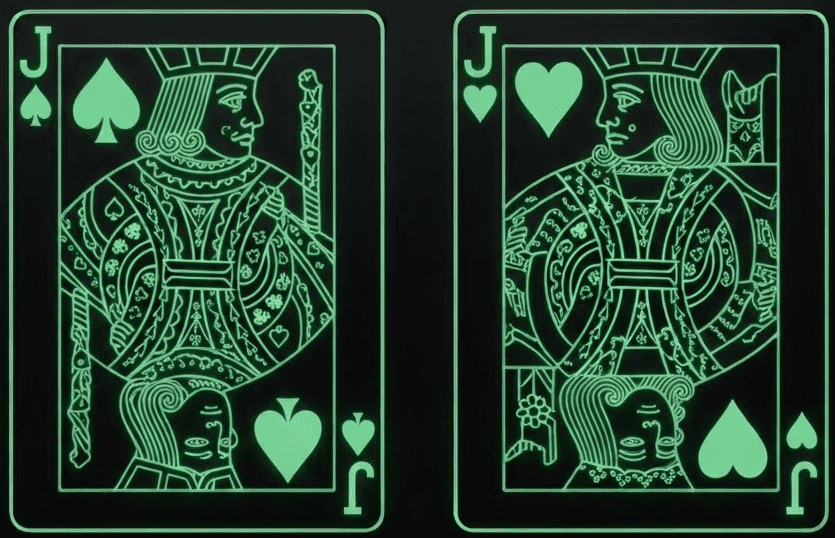
Pocket Jacks hold an approximate 77% preflop equity against random hands, making them a top-five starting holding, though they are notoriously tricky to play postflop. Dealt at a 0.45% frequency, Jacks often face overcards on the flop (Aces, Kings, or Queens appearing roughly 57% of the time). Success with Jacks requires raising aggressively preflop while maintaining disciplined flexibility on overcard-heavy board textures.
6. Ace-King Offsuit (AKo)
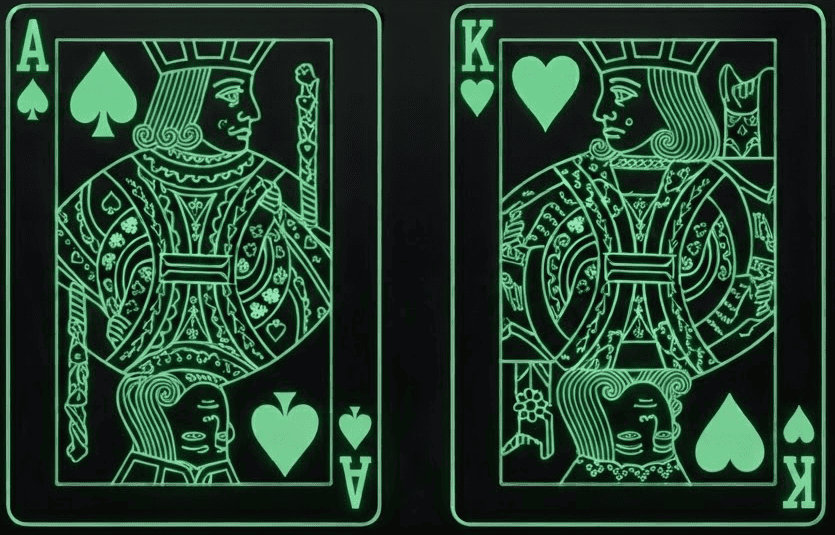
Ace-King offsuit carries the same raw rank power as its suited counterpart, boasting a 65% preflop win rate against random cards. Occurring four times as often as suited combinations (1.2% frequency), AKo dominates all lower Ace and King combinations. The main limitation compared to AKs is reduced flush equity, making it essential to play aggressively preflop to take control of the hand before the flop lands.
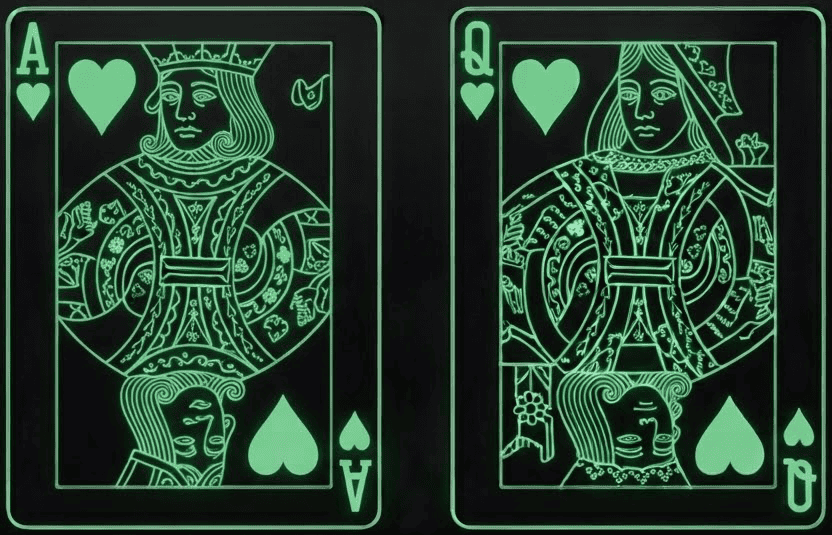
7. Ace-Queen Suited (AQs)
Ace-Queen suited is a premier broadway combination holding approximately 66% preflop equity against random holdings. Dealt at a 0.3% frequency, AQs hits strong top-pair combinations, nut flushes, and royal draw possibilities. It serves as an excellent 3-betting and opening hand from any table position, provided players navigate heavy 4-bet action carefully against tighter opponents.
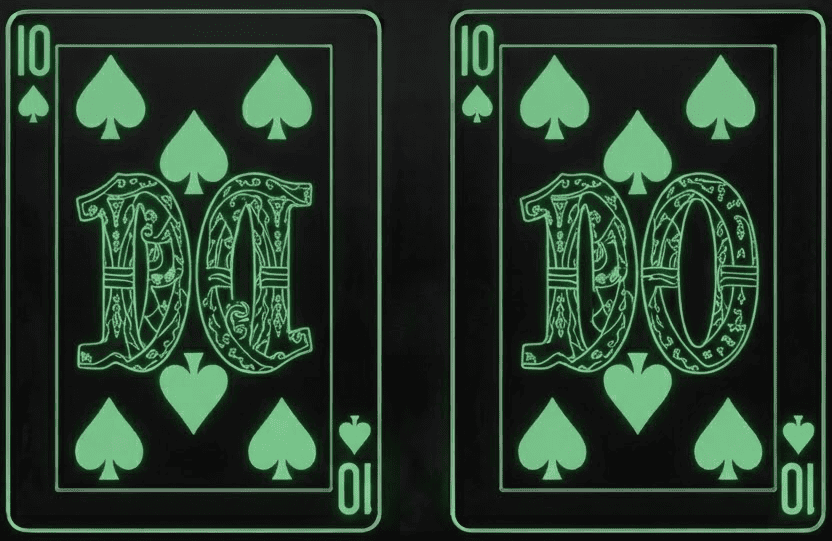
8. Pocket Tens (TT)
Pocket Tens hold an approximate 75% equity preflop against random card selections, functioning as the threshold between medium and high pocket pairs. Occurring at a 0.45% frequency, Tens perform exceptionally well in heads-up pots and late-position opening scenarios. Players should avoid over-committing stack depth when facing heavy preflop 3-bets or board textures stacked with multiple overcards.
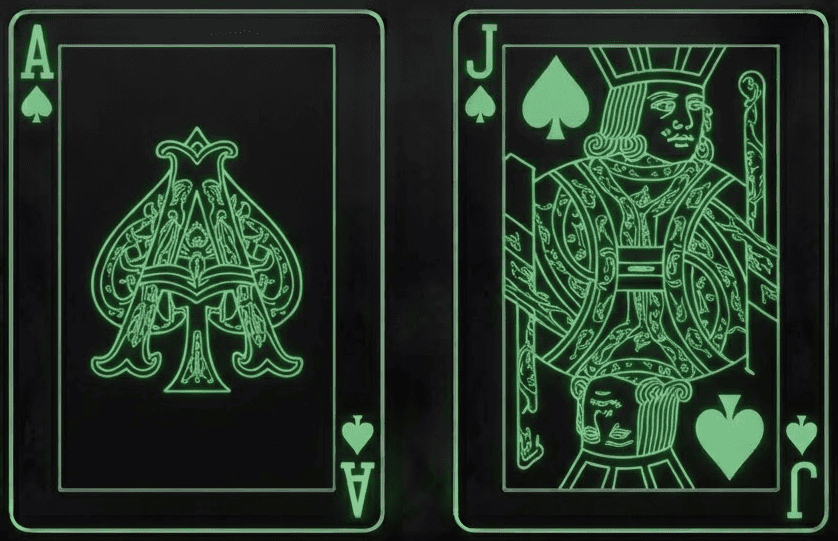
9. Ace-Jack Suited (AJs)
Ace-Jack suited provides roughly 64% preflop win expectation against random holdings, combining strong top-pair potential with nut-flush draws. Appearing with a 0.3% frequency, AJs is a staple opening hand across middle and late table positions. Players should exercise caution when facing early position raises, as AJs can occasionally be dominated by Ace-King or Ace-Queen.
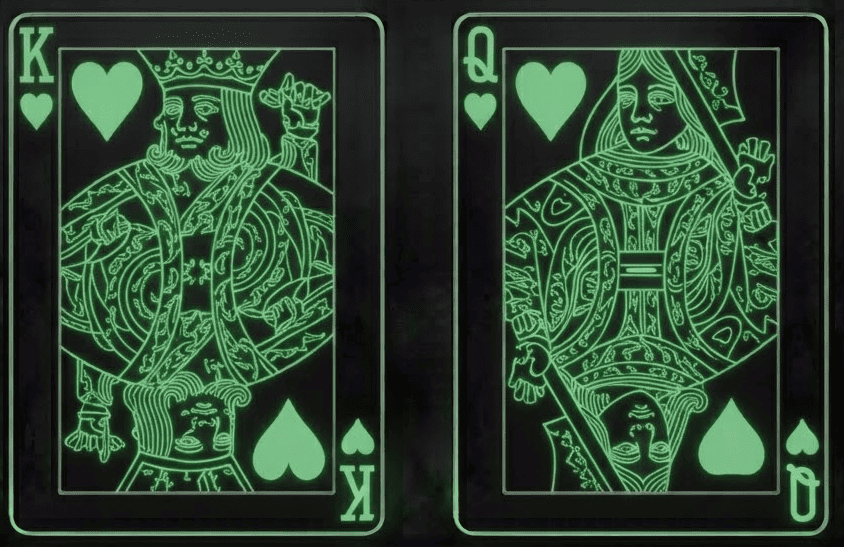
10. King-Queen Suited (KQs)
Rounding out the top ten, King-Queen suited holds an approximate 63% preflop win rate against random cards. Appearing at a 0.3% frequency, KQs is a broadway holding capable of making strong second-nut flushes, straights, and high two-pair combinations. It plays exceptionally well in position, allowing players to realize postflop equity through disciplined semi-bluffing and value betting.
Poker Starting Hands Ranking
To systematically categorize holdings, players group starting cards into distinct tiers based on raw power, playability, and equity. Utilizing a structured poker starting hands chart helps prevent subjective mistakes during fast-paced games.
| Tier Group | Hand Category | Specific Hand Combinations | Tactical Approach |
|---|---|---|---|
| Group 1 | Absolute Premiums | AA, KK, QQ, AKs | Premium value; open raise, 3-bet, and 4-bet aggressively from any seat. |
| Group 2 | High-Tier Holdings | JJ, TT, AQs, AKo, AJs, KQs | Strong value hands; open raise from all positions, 3-bet selectively. |
| Group 3 | Medium Premiums | 99, 88, AQo, ATs, KJs, QJs, JTs | Speculative & value mix; open from middle/late position; call raises with odds. |
| Group 4 | Speculative Holdings | 77-22, A9s-A2s, KTs, QTs, T9s, 98s | Set-mining and flush draws; open late, play cheaply to hit strong postflop boards. |
| Group 5 | Marginal/Weak | K9s, Q9s, J9s, A9o-A2o, Suited Gappers | Position-dependent steals; open fold early, steal from Cutoff or Button only. |
| Group 6 | Unplayable Trash | 72o, 83o, 94o, 102o, unsuited low cards | Unprofitable holdings; fold immediately preflop in all standard game scenarios. |
Poker Starting Hands Charts
Executing a proper strategy requires adjusting your starting selection based on table seat location. The following preflop matrix outlines standard opening ranges for 9-handed Texas Hold’em cash games:
| Table Position | Opening Range | Range Overview |
|---|---|---|
| Early Position (UTG) | AA–77, AKs–ATs, AKo–AQo, KQs–KJs, QJs | Premium & high pairs, top-tier broadways |
| Middle Position (MP) | AA–22, AKs–A8s, AKo–AJo, KQs–KTs, QJs–QTs, JTs | All pocket pairs, suited aces (A8s+), expanded broadways |
| Late Position (CO & BTN) | All pairs, all suited aces, suited connectors, broadways, A10o+, offsuit Kx | Maximum opening range designed for blind stealing |
| Blinds (SB & BB) | Defend / Open based on pot odds, position, & raiser dynamics | Highly dependent on opponent tendencies and pot mathematics |
To visualize how hand selection expands as position moves closer to the dealer button, consult the following summary table:
| Table Position | Recommended Opening % | Primary Hand Range Included | Primary Objective |
|---|---|---|---|
| Early Position (UTG) | 12% – 15% | Premium Pairs (77+), Big Broadways (AK, AQ) | Minimize risk against remaining players. |
| Middle Position (MP) | 18% – 22% | All Pairs, Suited Broadways, Suited Connectors | Capitalize on folded early position action. |
| Late Position (CO/BTN) | 35% – 45% | Broad Range, Suited Gappers, Offsuit Broadways | Steal blinds and gain postflop position. |
Best Starting Hands in Poker: 2 Examples
Example 1: Dominating a Lower Broadway Holding
You are dealt Ace-King suited on the Button. A player in middle position open raises with Ace-Jack offsuit, and you execute a 3-bet raise. The middle position player calls, and the flop comes Ace-8-3 rainbow. Your opponent checks, calls your continuation bet, and checks again on a blank turn and river. Showdown reveals that your top pair with top kicker completely dominates their top pair with lower kicker, earning you a substantial pot due to superior preflop hand strength.
Example 2: Flopping a Set with a Small Pair
You hold Pocket Fours in late position and call a modest opening raise from an early position player. The flop lands King-4-9, giving you a hidden three-of-a-kind (set) while your opponent holds King-Queen suited for top pair. Your opponent continuation bets, and you call. The turn brings a blank card, and your opponent bets again; you raise, and they call. On the river, you extract a sizable value bet, winning a massive pot because your small pocket pair hit set equity on a favorable board.
Good Starting Hands in Poker by Position
Position alters the practical value of your cards as much as their raw mathematical rank. Recognizing how seat location changes opening criteria is essential for steady win rates.
Early Position
When seated Under the Gun or in early seats, you must act first without knowing the intentions of players behind you. To mitigate this structural disadvantage, restrict your selection strictly to top poker starting hands such as premium pairs (88-AA) and big broadways (AK, AQ). Playing weak or marginal hands from early position frequently leads to out-of-position postflop blunders.
Middle Position
In middle position, several players ahead have already folded, yielding extra information about overall table strength. You can comfortably add good starting hands in poker like medium pairs (55-66), suited broadways (KJs, QJs), and strong suited connectors (JTs, T9s). This expanded selection allows you to enter pots with solid postflop playability while keeping positional risk manageable.
Late Position and the Blinds
Late position (Cutoff and Button) grants total control over action, allowing you to open the widest range of holdings, including speculative suited gappers, weak suited Aces, and broad offsuit connectors to steal blinds. Conversely, when playing from the Small Blind or Big Blind, exercise discipline; although the Big Blind receives a preflop discount, playing out of position postflop requires cautious hand selection against aggressive late-position raisers.
How to Play Strong Starting Hands
- Build Pots Preflop: Always raise or 3-bet with premium holdings to build the pot early and isolate against individual opponents rather than playing bloated multi-way pots.
- Avoid Slow-Playing Premiums: Passively checking or calling preflop with Pocket Aces or Kings invites low speculative hands to hit cheap two-pair or draw combinations on the flop.
- Target Maximum Value: When you flop top pair or better with a strong starting hand, construct logical value bets across multiple streets to extract chips from lower pairs and draws.
- Maintain Postflop Awareness: Recognize when community cards render your starting hand vulnerable, such as holding Pocket Kings on an Ace-high board or Pocket Queens on a heavily coordinated straight board.
- Size Bets According to Stack Depth: Adjust preflop raise sizes to match effective stack sizes, ensuring you gain appropriate implied odds when set-mining or playing speculative holdings.
Common Mistakes to Avoid
- Playing Over-Aggressively with Marginal Aces: Entering raised pots with weak offsuit Aces (like A-4 offsuit) leads to reverse implied odds when you hit top pair with a weak kicker.
- Ignoring Table Position: Treating hands like Pocket Eights or King-Queen offsuit identical from UTG as you would on the Button ignores fundamental positional dynamics.
- Over-Defending Small Pairs Postflop: Continuing to call multiple bets with unimproved small pairs on board textures filled with higher overcards drains overall chip stack depth.
- Falling in Love with Premium Pairs: Refusing to fold Pocket Aces or Kings when the board texture heavily favors an opponent’s obvious set or completed straight draw.
- Open-Limping Preflop: Open-limping into pots with good starting poker hands surrenders initiative, fails to build value, and invites multi-way scenarios that reduce win equity.
Final Thoughts
Mastering preflop card selection is the single most effective way to eliminate costly errors and build a resilient poker strategy. By restricting early position entries to premium holdings and systematically expanding your range as you move toward the Button, you immediately maximize postflop equity and positional advantage.
Consistently evaluating hands through structured rankings and preflop matrix charts transforms emotional guesswork into disciplined, profitable execution over the long haul. To further refine your tactical skill set and explore advanced postflop strategies, explore our full library of guides at the BCPoker Academy.