



Your first poker book should help with decisions you actually face: which hands to enter, what a call costs, and when to fold. An impressive title isn’t much use if every paragraph sends you searching for definitions.
At BCPoker, our selection of the best poker books for beginners covers several learning needs rather than treating every newcomer alike. Some readers need rules; others understand the game but struggle with betting decisions. These are recommendations for study in 2026, not a list of books published this year.

How We Chose The Best Poker Books For Beginners


Best Poker Books to Start With
Use these recommended poker books according to your current knowledge, not simply their numbered order. The final selection is a progression option rather than a first lesson.
| Book 🌟 | Author ✍️ | Best For 🎯 |
|---|---|---|
| 📖 Winning Poker in 30 Minutes a Day | Ashley Adams | Recreational Hold’em players seeking manageable strategy lessons. |
| 🃏 Poker For Dummies | Richard D. Harroch and Lou Krieger | Complete newcomers learning rules, terminology, and table procedures. |
| 🧠 The Theory of Poker | David Sklansky | Players ready to examine the reasoning behind poker decisions. |
| 🔢 Essential Poker Math | Alton Hardin | Beginners who want more confidence with odds and calculations. |
| 📈 Modern Poker Theory | Michael Acevedo | Improving players preparing for advanced game-theory study. |
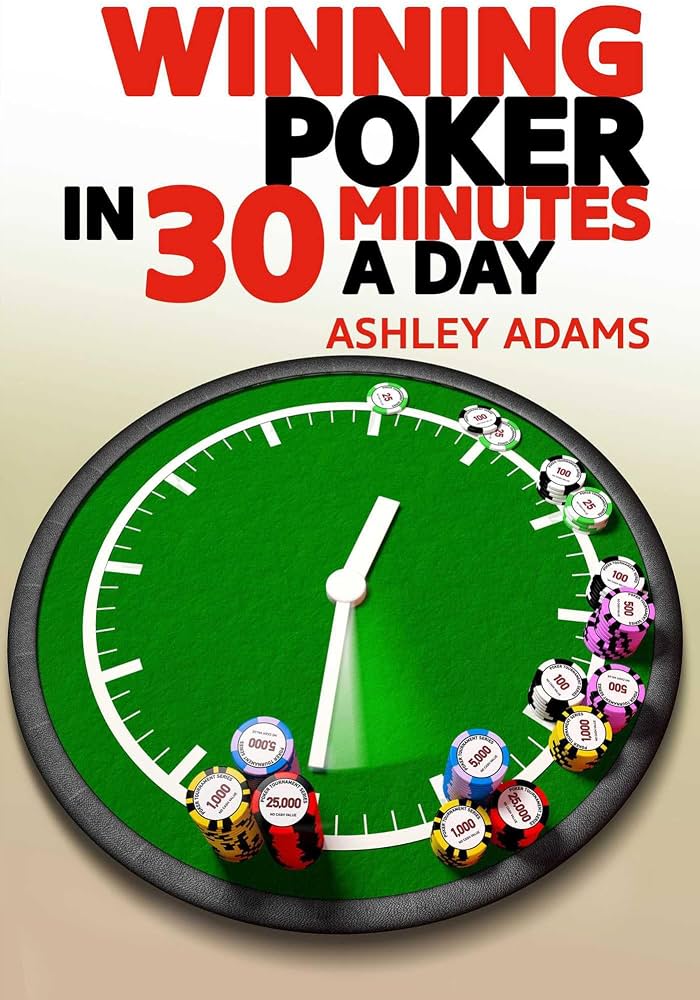
1. Winning Poker in 30 Minutes a Day
Ashley Adams focuses on recreational No-Limit Hold’em rather than elite competition. Across 208 pages, the book includes more than 30 exercises, with material covering position, odds and outs, opponent assessment, and other practical decisions.
Its appeal is the manageable workload. You can take one subject, make your own choices in the exercises, and compare your reasoning with the explanation instead of rushing through several chapters.
We’d use it as an early strategy book once betting rounds and hand rankings are familiar. Keep a note of mistakes that repeat, then return to those topics after reviewing your own hands. The title suggests a study routine, not a promise that thirty minutes of reading will produce daily winnings.
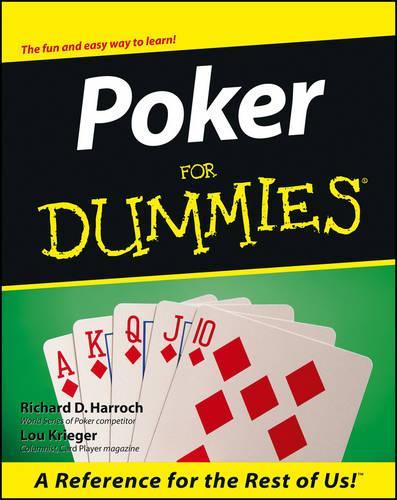
2. Poker For Dummies
Richard D. Harroch and Lou Krieger provide a broad introduction covering Texas Hold’em, Omaha, Seven-Card Stud, home games, tournaments, and cardroom behavior. The 336-page guide, first published in paperback in 2000, also addresses bluffing, money management, and recordkeeping.
That breadth makes it a useful poker book for beginners who find the surrounding procedures as confusing as the cards. Understanding an ante, a betting round, and a tournament entry helps you follow a game without guessing what happens next.
We recommend it primarily for orientation rather than as a description of today’s online platforms. Use it to become comfortable with poker’s mechanics, then choose more specialized material for the format you actually intend to play.
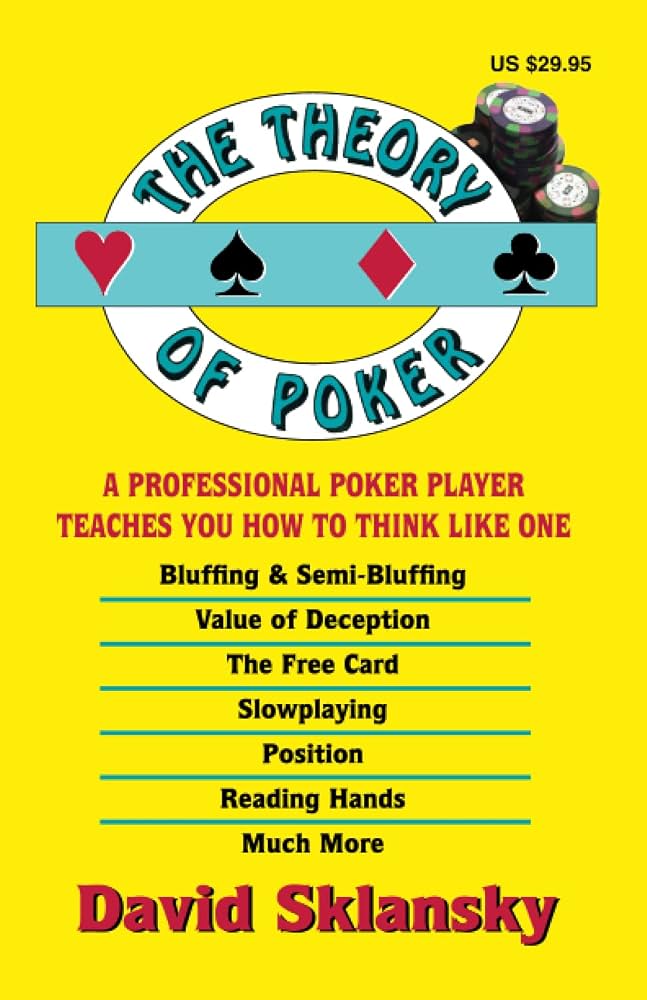
3. The Theory of Poker
David Sklansky shifts attention from individual cards to the information behind a decision. His Fundamental Theorem of Poker uses the contrast between decisions made with hidden information and decisions made with all cards known as a way to examine mistakes. The book discusses implied odds, deception, semi-bluffing, position, and other strategic ideas through several poker variants, including Hold’em, Stud, and Draw.
This is our choice for readers who know the mechanics but want better reasons for betting or folding. Don’t rush through unfamiliar examples just because they use a different game. Identify the decision being tested, then consider where a similar problem appears in your own sessions.
Treat it as conceptual training, not a current opening-range chart.
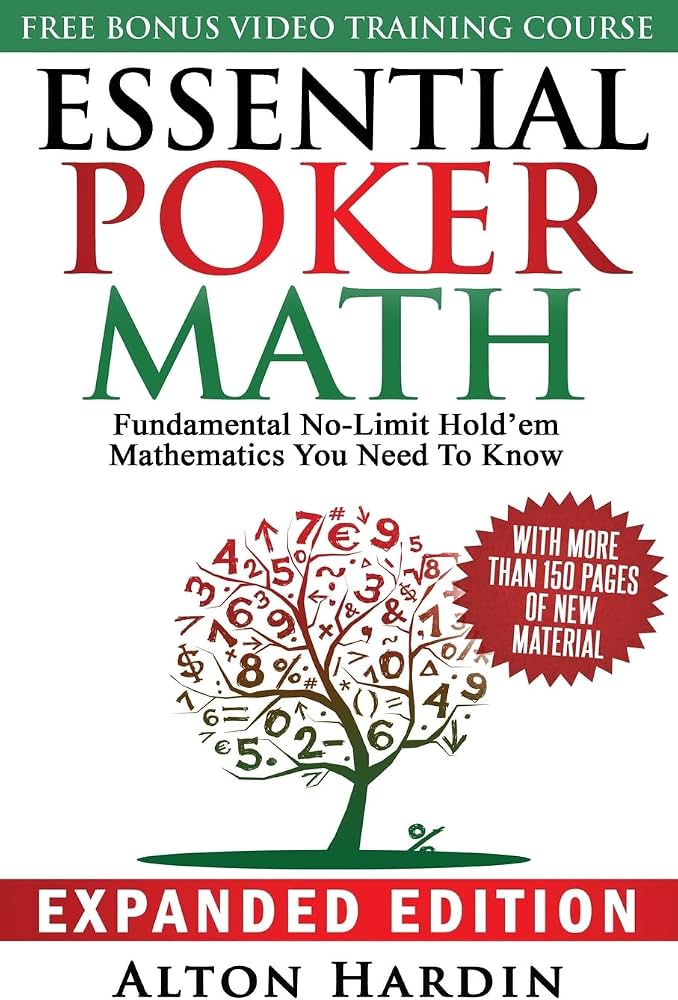
4. Essential Poker Math
Alton Hardin concentrates on calculations that support No-Limit Hold’em decisions: probability, pot odds, implied odds, expected value, and card combinations. For the main text, we favor the Expanded Edition, which includes more than 75 practice hand scenarios.
There is also a separate Workbook Edition, released in 2024, with more than 190 exercises and scenarios. That distinction matters when choosing a copy: the workbook emphasizes practice rather than being another name for the expanded book.
Our recommendation is to work through calculations on paper before trying to perform them quickly. Focus on understanding the denominator in a pot-odds calculation, not just remembering a percentage. Accuracy comes first; speed can develop through repetition.
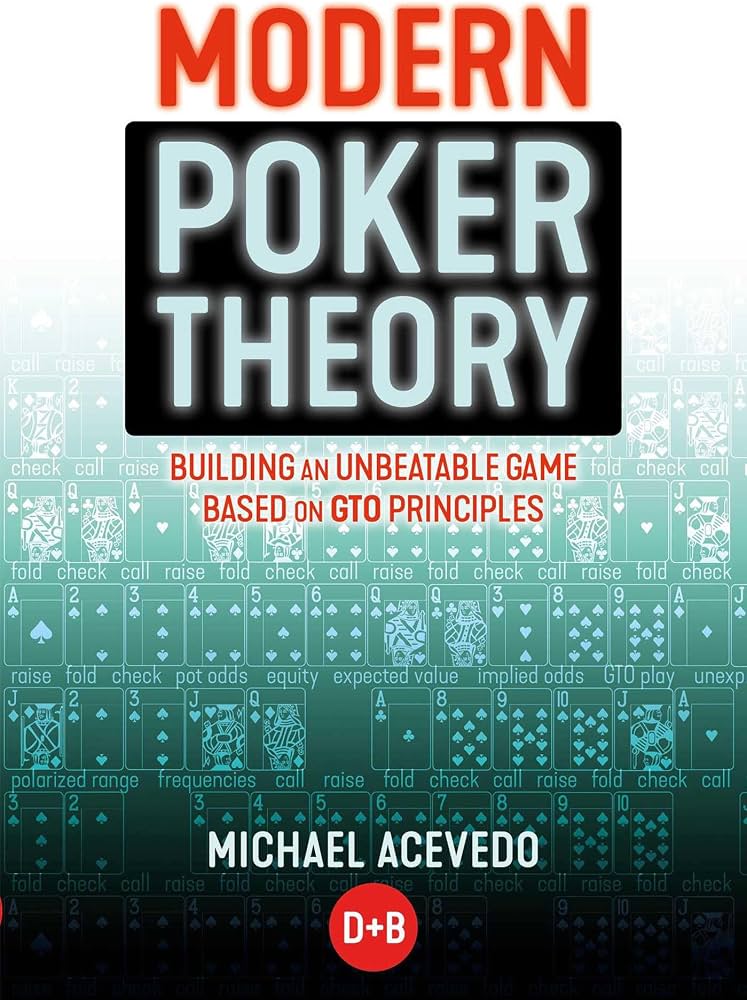
5. Modern Poker Theory
Michael Acevedo’s 480-page book, published in 2019, examines No-Limit Hold’em through game theory optimal play, commonly shortened to GTO. It connects theoretical analysis with software-based study and practical poker decisions.
This is the most demanding selection here. We include it to show where a beginner’s study can lead, not because every new player should start with detailed equilibrium analysis.
Approach it after you can explain pot odds, equity, and hand ranges without looking them up. Study a concept, identify its assumptions, and work through an example before continuing. A chart is easier to misuse when you don’t understand the situation it describes. For us, the book’s value is in developing more structured reasoning, not encouraging automatic imitation.
What Should A Beginner Learn From Poker Books?
The best books to learn poker should leave you able to explain your decisions. Use the following skills as checkpoints, rather than measuring progress only by completed pages.




What Poker Books Can’t Teach You
Books can explain patience, discipline, and emotional control, but reading about those qualities isn’t the same as developing them. Staying composed after losing with a strong hand, resisting an impulsive call, and stopping at your planned limit require practice. The goal isn’t to eliminate emotion. It’s to recognize frustration or excitement before either starts making decisions for you.
Practical experience also reveals where your understanding needs work. Use practice hands or home games to focus on one skill at a time, then review situations that felt uncomfortable. Write down why you chose an action, ask for feedback, and look for repeated mistakes rather than judging yourself by one winning or losing session. Playing more hands is useful only when you learn something from them.
Choosing the best poker books to improve your game is only the beginning. Select a book that addresses your current difficulty, work through its examples, and check whether your decisions become easier to explain. Reading cannot remove poker’s uncertainty, but it can give your practice a clearer direction.
Continue with our BCPoker Academy guides as new questions arise, building understanding one topic at a time.