



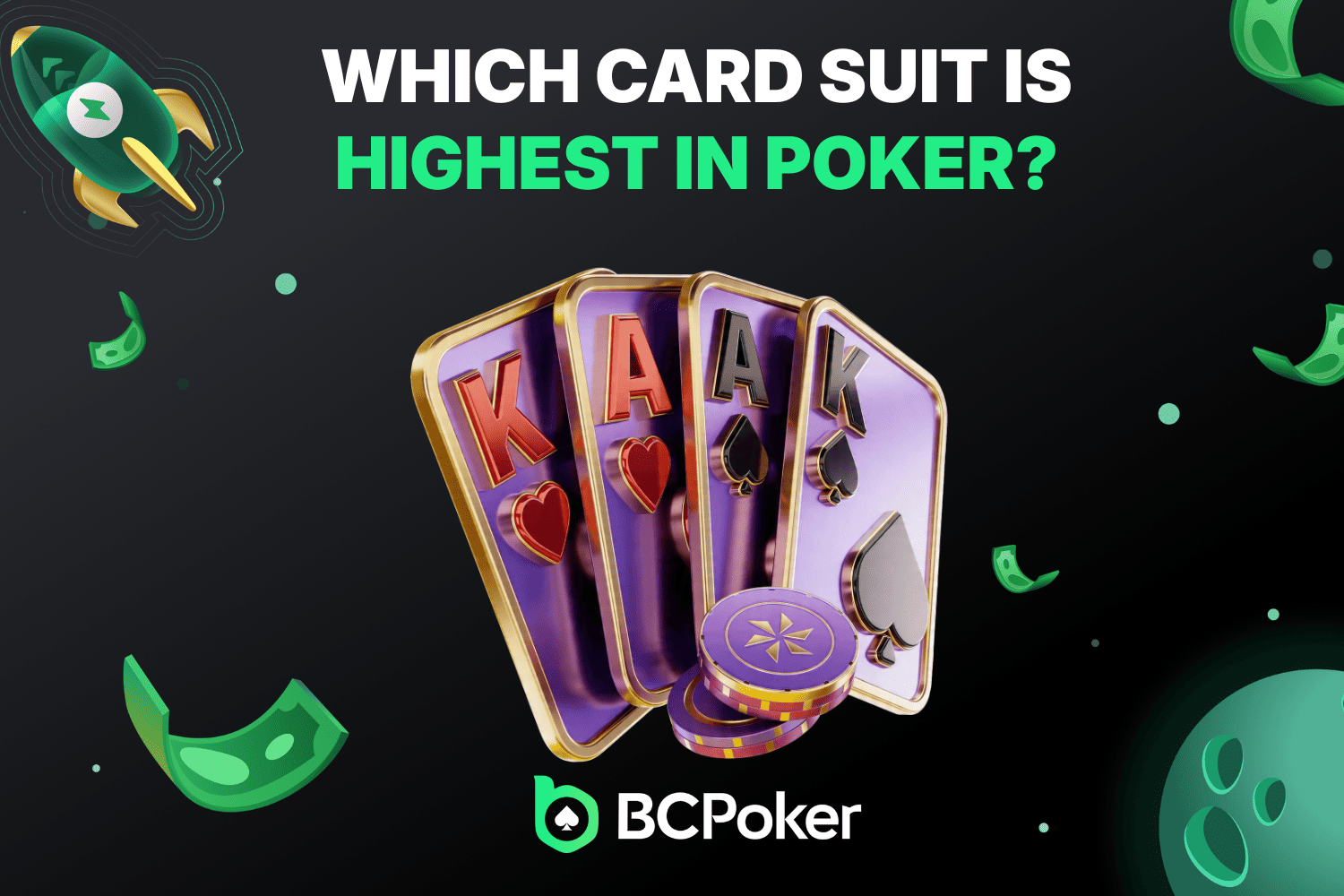
In many live poker rooms, suits may be ranked from highest to lowest as spades, hearts, diamonds, and clubs for procedural tie-breaking situations. In almost all poker games, suits are considered equal and have no impact on hand strength. However, there are three specific situations where suit ranking is used: determining the bring-in in stud games, assigning the dealer button when cards are tied, and splitting odd chips in pots that cannot be divided evenly.
Many players first learn about poker suit ranking the hard way at a live table. Knowing the order in advance prevents awkward moments and keeps the game moving smoothly.

Understanding Poker Suit Rankings
A standard deck contains 52 cards divided into 13 ranks and four suits: spades, hearts, diamonds, and clubs. Short deck games such as Six Plus Hold’em still use the same four suits with nine cards each for a total of 36 cards.
In everyday play, all poker suits hold equal value. Yet certain scenarios call for a clear hierarchy to break ties. A commonly used suit order from highest to lowest is spades, hearts, diamonds, and clubs, though house rules may vary.
This ranking follows reverse alphabetical order of the first letter of each suit name. In many tournaments and live casino settings, this sequence is commonly used, but players should still check the house rules before play.
Serious players benefit from memorizing the order before joining stud games or live events. The simple mnemonic reverse alphabetical helps: spades beat hearts, hearts beat diamonds, and diamonds beat clubs.
When Does the Highest Suit Matter?
Suits never decide who wins the main pot. A heart royal flush and a spade royal flush split the pot if they meet head to head.
Suit ranking applies only in these three procedural cases:
Player with the lowest upcard posts the bring in. When ranks tie, the lower ranking suit posts first. For example, a two of hearts posts before a two of spades.

Players draw one card to determine the starting button. The highest card wins with suits breaking any ties. The same method selects seats or game choice in mixed formats.

When an odd number of chips remains after a split the highest ranking suit receives the extra chip.
These rules ensure fair and consistent decisions without slowing down the action.
Simple Examples: Comparing Card Suits
Example 1: Seven Card Stud. Two players show a three of clubs and a three of diamonds as their lowest upcard. Because diamonds rank higher than clubs, the player with the three of diamonds avoids the bring-in. The three of clubs player must post the forced bet. This small difference can affect early pot building.
Example 2: New table seating. Players draw one card each to decide the button. Player A draws the king of hearts while Player B draws the king of spades. Spades rank higher so Player B receives the dealer button and acts last on the first hand. The suit ranking resolves the tie instantly and fairly.
Some Useful Tips for Using Poker Suits Effectively
- Memorize the order spades hearts diamonds clubs before your first stud session or casino visit.
- Stay alert to suited boards in stud games where bring in rules may apply on early streets.
- When drawing for the button or seats note the suit of your card so you understand your position immediately.
- In split pot situations check the suits of the winning hands to anticipate odd chip distribution.
- Use suit knowledge to avoid unnecessary questions at the table and maintain a professional image.
- Confirm house rules in international games since some regions use different suit orders.
Common Mistakes that Should be Avoided
- Assuming suit strength affects hand rankings such as believing a spade flush beats a heart flush.
- Ignoring suit ranking in poker during stud games and missing bring in obligations.
- Arguing over odd chip splits without understanding the official order.
- Overcomplicating decisions by trying to factor suits into regular hand strength comparisons.
- Forgetting to check local casino rules when traveling which can lead to confusion at the table.
Conclusion: Suit Ranking in Poker
In the vast majority of poker hands, poker suits play no role in determining the winner. The highest suit in poker matters only in those specific tie breaking moments that keep games fair and organized. Learning the order of suits in poker equips you to handle every situation with confidence and professionalism.
This knowledge forms part of the complete foundation every dedicated player needs. For more practical guides on poker rules, strategy and tournament tips, explore the full collection of resources in our Poker Academy at BCPoker.