




In Texas Hold’em, every decision begins long before the flop. The two cards a player receives form the foundation of every subsequent choice, and some combinations simply offer almost no realistic path to success. Among all possible starting holdings, one hand stands out as the clear statistical and strategic outsider. That hand is 7-2 offsuit.
Players and analysts across the industry consistently identify 7-2 offsuit as the worst hand in poker. The combination of low ranks, complete disconnection, and absence of suit coordination removes nearly every avenue for improvement. It cannot form a straight with any two community cards, it cannot begin a flush, and any pair it makes is immediately vulnerable to higher kickers. Against a random hand its equity sits near 34.5 percent; against a typical tight opening range the figure falls below 27 percent. These numbers explain why experienced professionals treat the hand as an automatic fold in virtually every situation.
Understanding the worst hand in texas holdem is more than trivia. It serves as a practical benchmark. Once a player internalizes why 7-2 offsuit fails on every measurable axis, it becomes easier to evaluate the next tier of weak holdings and to apply disciplined folding ranges. At BCPoker, coaches frequently use this hand as the starting point for pre-flop decision training because it forces new players to confront the difference between hope and mathematical reality.
The broader category of worst hands in poker shares several structural flaws: large rank gaps that kill straight potential, low absolute values that produce weak pairs, and offsuit status that eliminates flush equity. Recognizing these shared weaknesses allows a player to build a coherent strategy rather than treating each weak hand as an isolated puzzle.

What Are the Other Worst Starting Hands in Poker?
While 7-2 offsuit occupies the bottom position, several other combinations sit only marginally higher. The following table ranks the most common bad poker hands by approximate equity against a random hand and against a typical top-15 percent opening range. Figures are drawn from standard Monte-Carlo simulations used throughout the professional community.
| Hand | Equity vs Random | Equity vs Top 15 % | Primary Weakness |
| 7-2 offsuit | 34.6 % | 26.2 % | Zero straight potential, weak pairs |
| 3-2 offsuit | 32.3 % | 26.1 % | Lowest possible ranks |
| 6-2 offsuit | 34.1 % | 26.9 % | Minimal straight coverage |
| 8-2 offsuit | 36.8 % | 27.1 % | Large gap, low pair value |
| 7-3 offsuit | 36.6 % | 27.7 % | Limited connectivity |
| 8-3 offsuit | 37.5 % | 27.2 % | No straight, weak kicker |
| 9-2 offsuit | 39.1 % | 27.5 % | High card without support |
| 9-3 offsuit | 40.0 % | 27.9 % | Similar to 9-2, slightly better kicker |
| 10-2 offsuit | 41.7 % | 27.1 % | Famous but still unplayable |
| Jack-2 offsuit | 44.4 % | 27.9 % | Face card creates false confidence |
These worst starting hand in poker combinations share a common strategic recommendation: fold pre-flop in virtually every position except the rare case of a free look from the big blind against no aggression. The equity gap versus any reasonable range is simply too large to overcome through post-flop skill alone.
7-2 offsuit
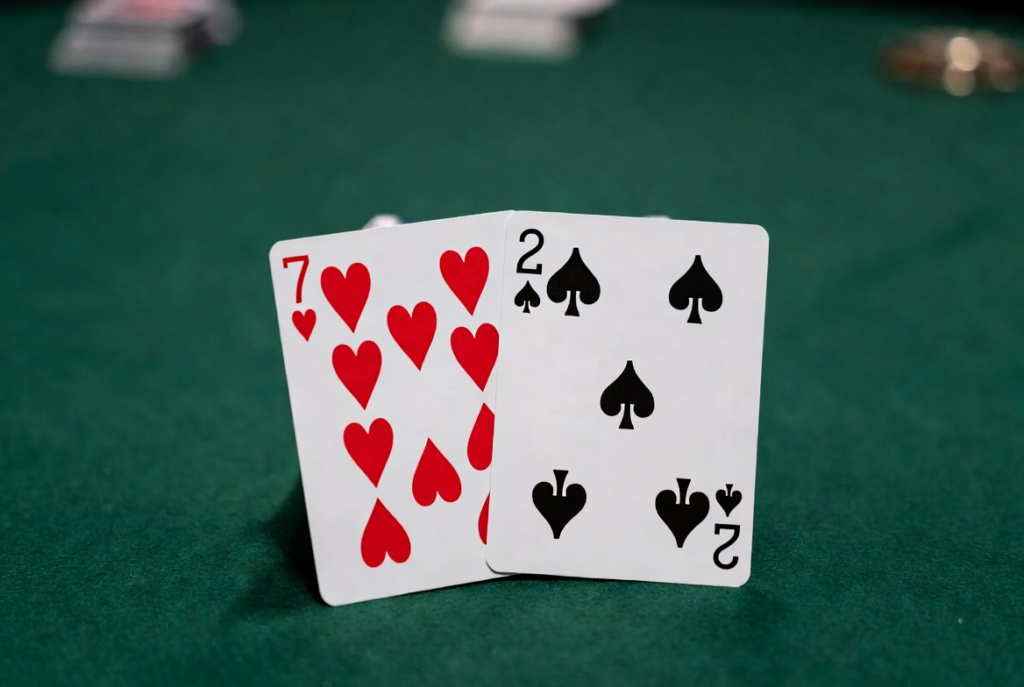
Seven-deuce offsuit remains the classic example of the worst poker hand. Its equity against any two random cards is approximately 34.6 percent and drops to 26.2 percent against a standard opening range. The hand cannot make a straight without four perfect community cards, an event that occurs less than once every several hundred hands. When it pairs, the resulting one-pair hand is almost always out-kicked.
In practice, the overwhelming majority of competent players fold 7-2 offsuit from every position. The only exception occasionally discussed is a multi-way limped pot in the big blind where the player can see a free flop. Even then, the correct continuation strategy is to check and fold to any significant bet unless the board produces an improbable two-pair or better. At BCPoker tables, this hand is treated as pure trash and is never opened voluntarily.
8-2 offsuit
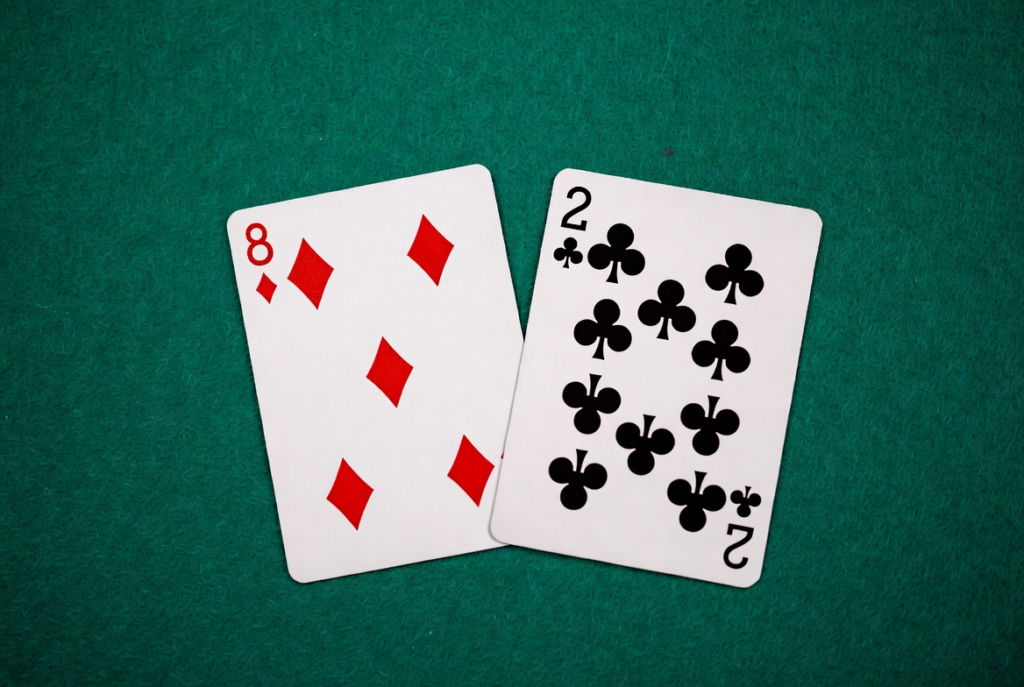
Eight-deuce offsuit improves only slightly on its lower neighbor. Equity versus a random hand rises to roughly 36.8 percent, yet against a top-15 percent range it remains near 27 percent. The additional rank offers a marginally stronger pair when an eight appears on the board, but the large gap still prevents any realistic straight draws.
Players almost universally fold 8-2 offsuit pre-flop. The rare exception is again the big-blind free look. Even in that spot, the hand is played purely as a speculative check-fold unless the flop delivers an unexpected strong combination. Disciplined regulars at BCPoker simply release the hand without second thought.
6-2 offsuit
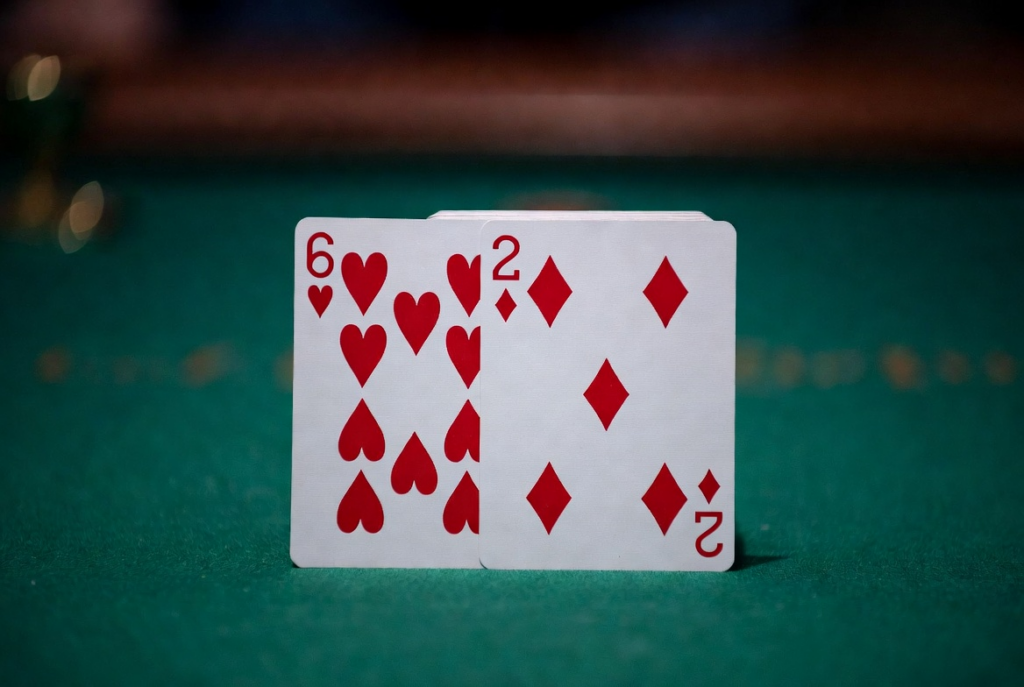
Six-deuce offsuit records approximately 34.1 percent equity against a random hand. It possesses a slim chance of making the bottom end of a straight on boards such as 5-4-3, yet those boards are rare and usually leave the player with a vulnerable holding. Against any competent range the equity falls below 27 percent.
Standard practice is an immediate fold. Only the most passive multi-way pots from the big blind justify a look, and even then the plan is to abandon the hand at the first sign of resistance.
7-3 offsuit
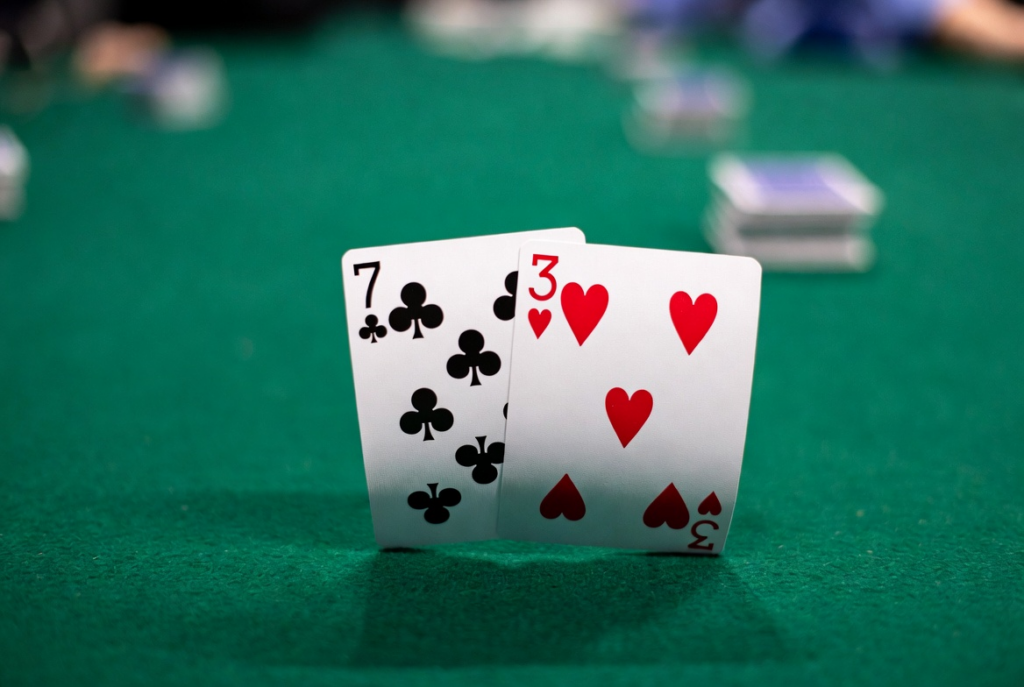
Seven-trey offsuit sits near 36.6 percent equity versus random cards. The three provides a second possible straight path (5-4-3 or 6-5-4), yet the overall connectivity remains poor and the pairs it forms are weak. Versus typical opening ranges the figure drops to about 27.7 percent.
Professionals fold this hand without hesitation from every seat except the occasional free flop in the big blind. Continuation beyond that point requires an unusually favorable board texture that almost never materializes.
8-3 offsuit
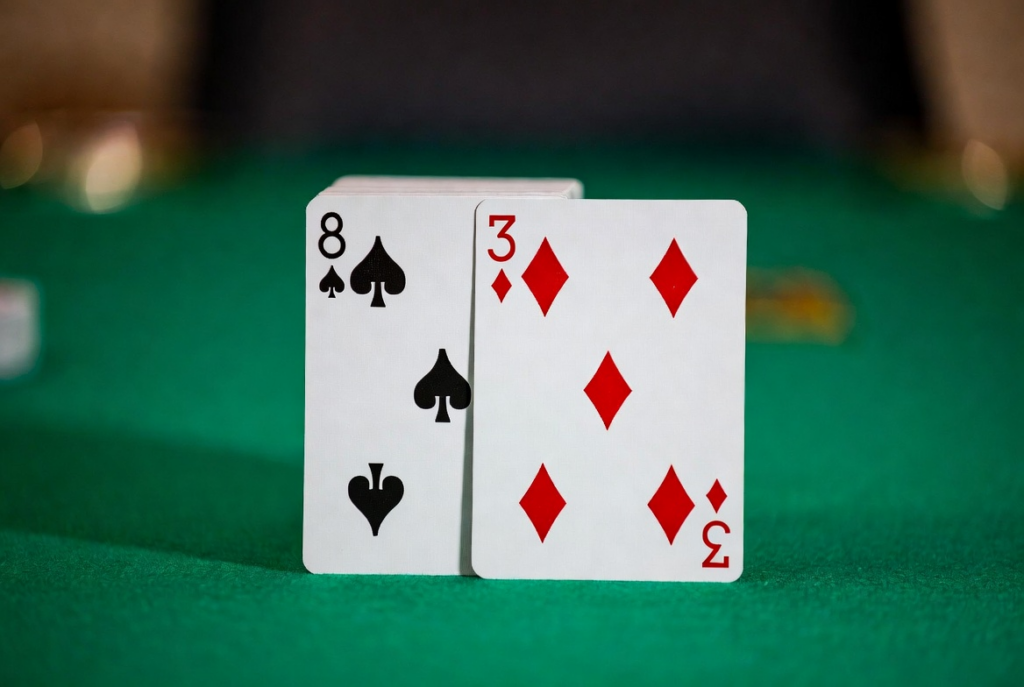
Eight-trey offsuit reaches approximately 37.5 percent equity against a random hand. The absence of straight potential and the low absolute ranks leave it with almost no post-flop playability. Against a realistic range the equity sits near 27.2 percent.
The standard decision is a pre-flop fold. Players who attempt to realize equity by calling raises or limping routinely lose money over the long term. At BCPoker the hand is treated as pure discard material.
9-2 offsuit
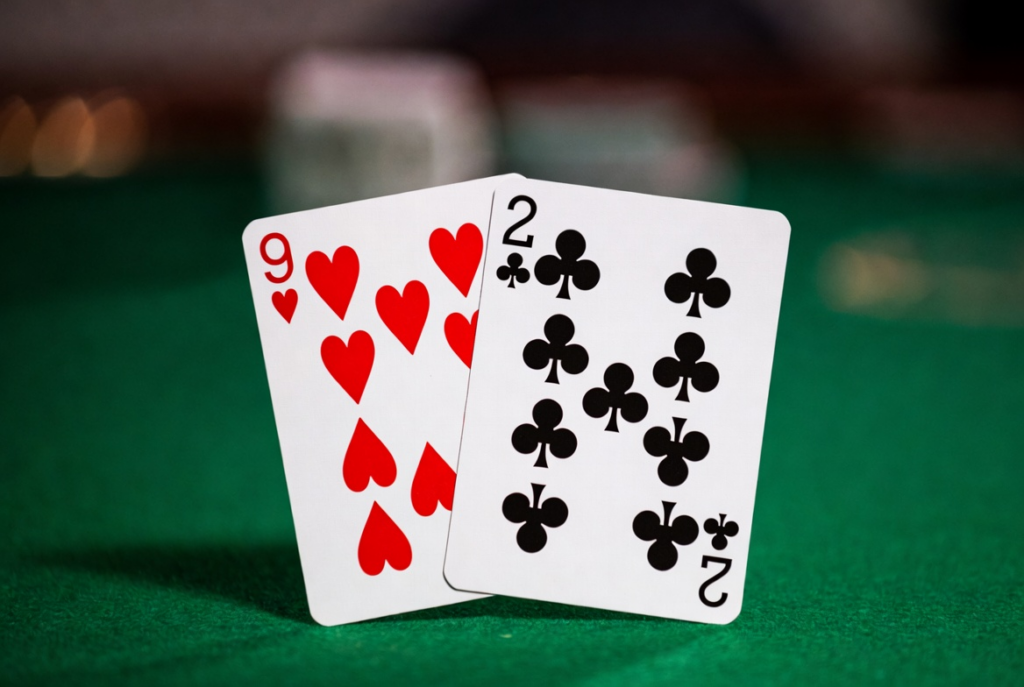
Nine-deuce offsuit improves high-card strength to roughly 39.1 percent equity versus random cards. The nine can win unimproved sometimes, yet the deuce kicker is so weak that any pair is easily dominated. Versus top ranges the equity remains around 27.5 percent.
Experienced players fold 9-2 offsuit from all positions. The temptation to play the nine is understood but firmly rejected in favor of tighter ranges.
9-3 offsuit
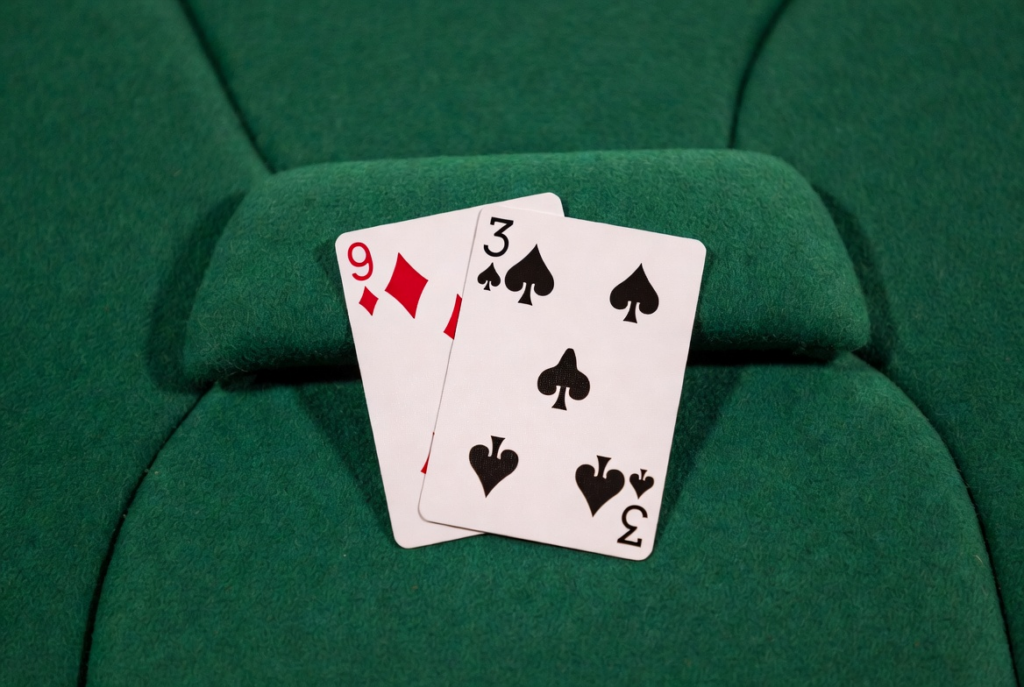
Nine-trey offsuit edges slightly higher at about 40 percent equity against random hands. The improved kicker is marginal and does not meaningfully change post-flop dynamics. Against competent ranges the figure stays near 27.9 percent.
The recommended action remains an automatic fold. Only the most passive free-flop situations in the big blind justify any further consideration, and even then the default line is check-fold.
10-2 offsuit
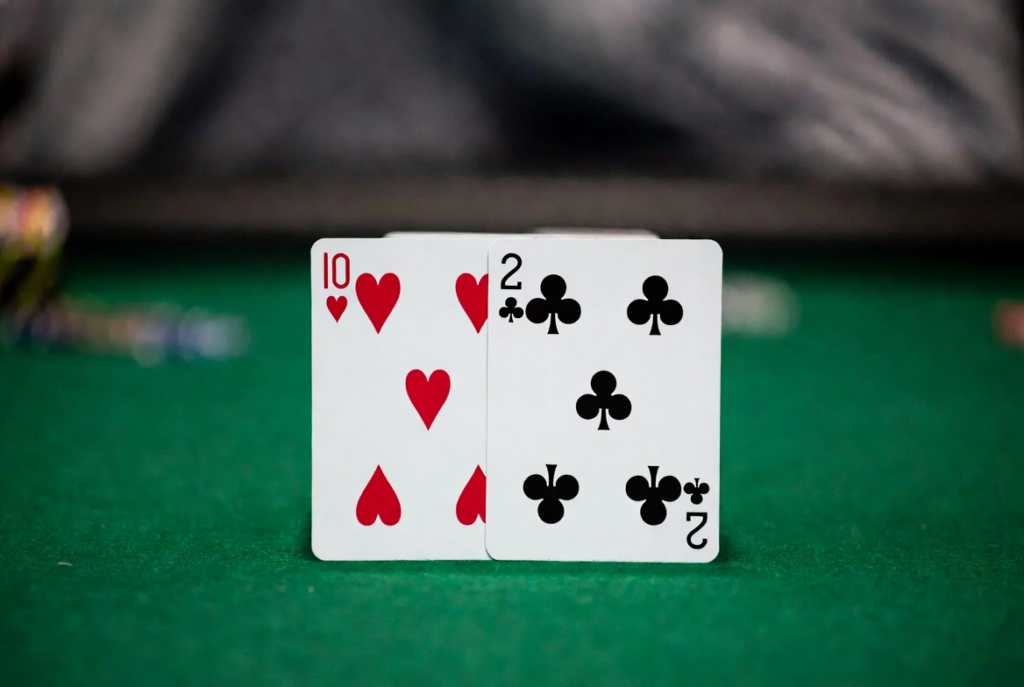
Ten-deuce offsuit reaches roughly 41.7 percent equity versus a random hand, largely because of the ten’s high-card value. Doyle Brunson’s famous tournament wins with the hand have given it a certain mythic status, yet the statistical reality is unforgiving. Against a top-15 percent range equity falls to approximately 27.1 percent, and the hand still cannot form a straight with two cards.
Modern strategy treats 10-2 offsuit as a clear fold. The romantic stories do not change the long-term expected value. Players at BCPoker are coached to ignore the folklore and release the hand.
Jack-2 offsuit
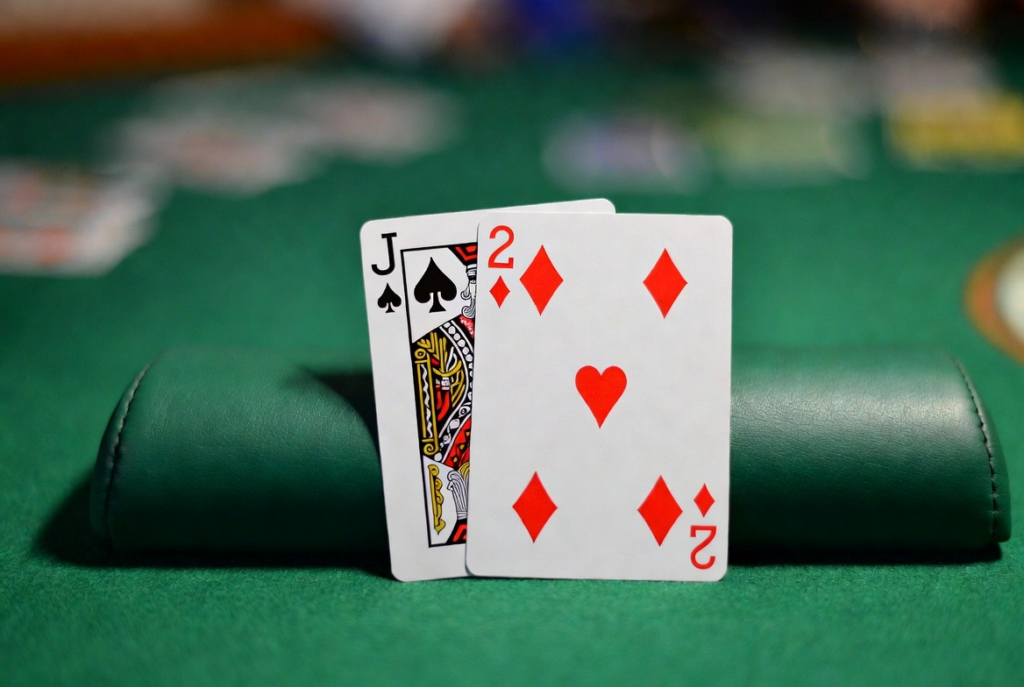
Jack-deuce offsuit shows the highest equity among the listed trash hands at about 44.4 percent versus random cards. The face card creates an illusion of playability, yet the deuce kicker turns almost every pair into a dominated holding. Against realistic ranges the equity remains near 27.9 percent.
Disciplined players fold Jack-2 offsuit without exception outside of free big-blind flops. The temptation to “see what happens” is one of the most common and expensive leaks among intermediate players.
3-2 offsuit
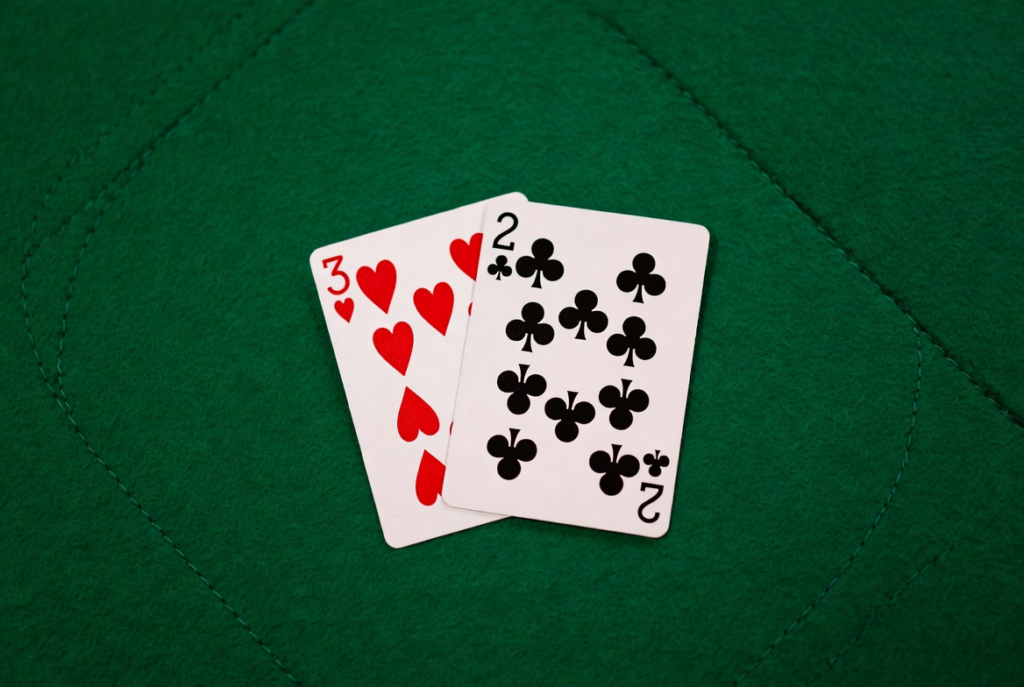
Three-deuce offsuit, sometimes called the “dirty diaper,” records the lowest equity against a random hand at approximately 32.3 percent. It can form the wheel or a low straight, yet those outcomes are rare and usually leave the player with the bottom end of the distribution. Versus typical ranges the figure is 26.1 percent.
The hand is folded from every position. Even free flops are approached with extreme caution because any pair or straight is so easily dominated.
How Should Beginners Handle Bad Poker Hands?
New players often struggle most with the emotional impulse to “see a flop” with weak holdings. The correct approach is both simple and strict.





Can the Worst Hand in Poker Still Win?
Yes. Randomness remains an irreducible element of Texas Hold’em. Every so often the community cards align in a way that turns 7-2 offsuit into a winning full house or straight. Professional players occasionally win small pots with these hands when they receive a free flop and the board cooperates. Bluffing lines from late position against tight opponents can also succeed on rare occasions, particularly when table image is extremely strong.
None of these possibilities changes the strategic recommendation. The long-term expected value of voluntarily putting money into the pot with the worst hand in poker is sharply negative. Occasional wins are statistical noise, not a reason to alter ranges. At BCPoker the guiding principle is clear: protect the bankroll by refusing to play the hands that mathematics has already rejected.
Mastery of Texas Hold’em begins with the willingness to fold the worst holdings every single time they appear. Once that discipline is established, the remaining decisions become clearer, the variance decreases, and long-term results improve. The worst poker hand is not merely a curiosity; it is the clearest illustration of why selective aggression and rigorous folding form the foundation of profitable play.