




A straight in poker ranks among the more reliable made hands you will encounter at the tables. Five straight cards in a row give you real power in many situations, though the hand’s true value always depends on board texture and what opponents might hold. Learning to spot, play, and protect a straight poker hand separates consistent winners from the rest.

What is a Straight?
A straight forms when you hold five consecutive ranks, suits do not matter. Think of sequences like 7-8-9-10-J or even A-2-3-4-5 where the ace drops low. The top card sets the strength: king-high beats queen-high every single time. Aces bring extra flexibility since they work high in Broadway straights or low in wheels. If you sit one card short, you chase a draw. Four connected cards create an open-ended straight draw with eight possible outs. A gap in the middle leaves you with a gutshot and only four outs. Recognizing these differences early helps you decide whether to push forward or let the hand go.
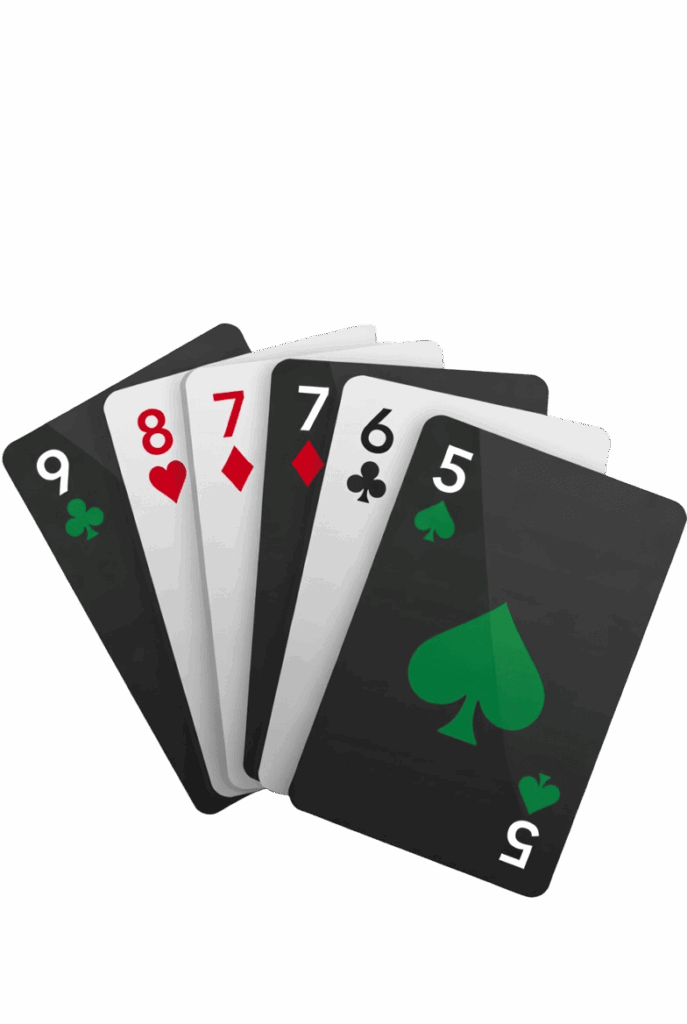
Examples of Straight
Real hands show how straight poker hands perform in practice. They frequently win against pairs and weaker combinations, yet flush draws, higher sequences, or made flushes can easily overtake them.




How Straight is Ranked (Highest Card Rules + Wheel Straight)
In head-to-head matchups, poker straight ranking boils down to the top card: a king-high straight (9♠ 10♥ J♣ Q♦ K♠) trounces a queen-high (8♦ 9♣ 10♥ J♠ Q♦). Suits play no role in standard poker variants it’s pure sequence supremacy. The wheel (A-2-3-4-5) ranks lowest, vulnerable yet capable of scooping pots against overpairs.
This rule keeps evaluations simple and swift. If straights match exactly common with board-runouts like 7-8-9-10-J pots split evenly, underscoring the need for position and reads. Precision here separates pros from amateurs in high-stakes straight poker game environments.
Straight Poker: What It Beats and What Beats It
A straight poker hand requires five cards in consecutive order using at least two different suits. Examples range from A-2-3-4-5 (five-high) through 5-6-7-8-9 (nine-high) up to 10-J-Q-K-A (Broadway).
In the official poker hand rankings, a straight sits above three of a kind and two pair but falls short of a flush. It overpowers one pair, two pair, and three of a kind reliably. Flush, full house, four of a kind, straight flush, and royal flush all beat it. A higher straight also takes the pot.
Straight in Poker: Chance
Straight poker hands appear more often than people think. In a random five-card deal, the chance sits around 0.39 percent. Texas Hold’em changes the picture depending on starting cards.
| Starting Hand Type | Flop Probability |
|---|---|
| 🃏 Any hand | 0.39% |
| 🔗 Connected cards (e.g. 6-7) | 1.29% |
| 〰️ One-gap (e.g. 8-10) | 0.85% |
| ⬛ Two-gap (e.g. 6-9) | 0.61% |
Additional useful figures: open-ended straight draws complete by the river roughly 31.5 percent of the time. Gutshots from flop to turn hit only about 8.5 percent. Pocket pairs flop a straight draw around 4.12 percent. AK flops Broadway at 0.39 percent. Keep these numbers in mind to stay disciplined.
Strategy Tips When You Have a Straight
With a made straight in hand, value betting usually makes sense on dry boards where few draws exist. Extract chips from overpairs, two pairs, and weaker holdings. Always check whether your straight qualifies as the nuts or sits on the lower end.
Boards with three cards of one suit demand careful sizing; a flush might already be there or incoming. When the board pairs on later streets, full houses become possible, so control the pot size against aggressive opponents. Multiway pots increase the risk someone holds a flush or better straight.
Example scenario: you flop a strong straight on a rainbow board. Lead out to build the pot. If the turn pairs a card or brings a flush possibility, shift to checking and calling smaller bets rather than blasting away. Adjust lines based on texture to protect your stack.
Mistakes to Avoid with Straight Poker Hands
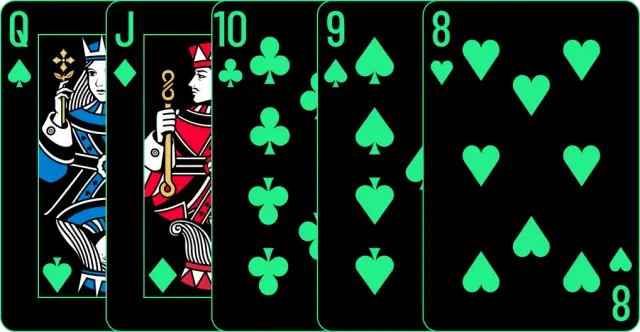
One of the most expensive errors involves chasing straight draws without proper math. Players get excited about eight outs and ignore whether the price justifies the risk.
Consider this spot: you hold 5♦ 6♥, board shows 7♣ 8♥ J♠ 2♦, pot stands at $50. Opponent bets $50 into the $50 pot. You now face $50 to win $150 total (3:1 odds, needing 33 percent equity). Your eight outs give roughly 16 percent on the river. Calling loses money over time. Fold and preserve chips for better spots.
Another common pitfall: holding the dummy end (bottom straight) like 4-5 on a 6-7-8 board. Higher straights dominate you at showdown. Overvaluing gutshots multiway also drains stacks since they miss far more often than they hit. Always weigh odds against pot size before committing.
Conclusion
A straight delivers serious winning potential in the straight poker game, capable of stacking opponents when the board cooperates. Still, stay alert whenever flush possibilities or paired boards appear. Beginners frequently ignore these dangers and pay heavily. Treat low-end straights with respect; they lose to superior versions too often. Gutshot draws deserve caution since missing them repeatedly costs far more than the occasional win covers. Apply solid poker straight rules and your decisions improve across every session.