


Kenney sees each hand as a creative decision
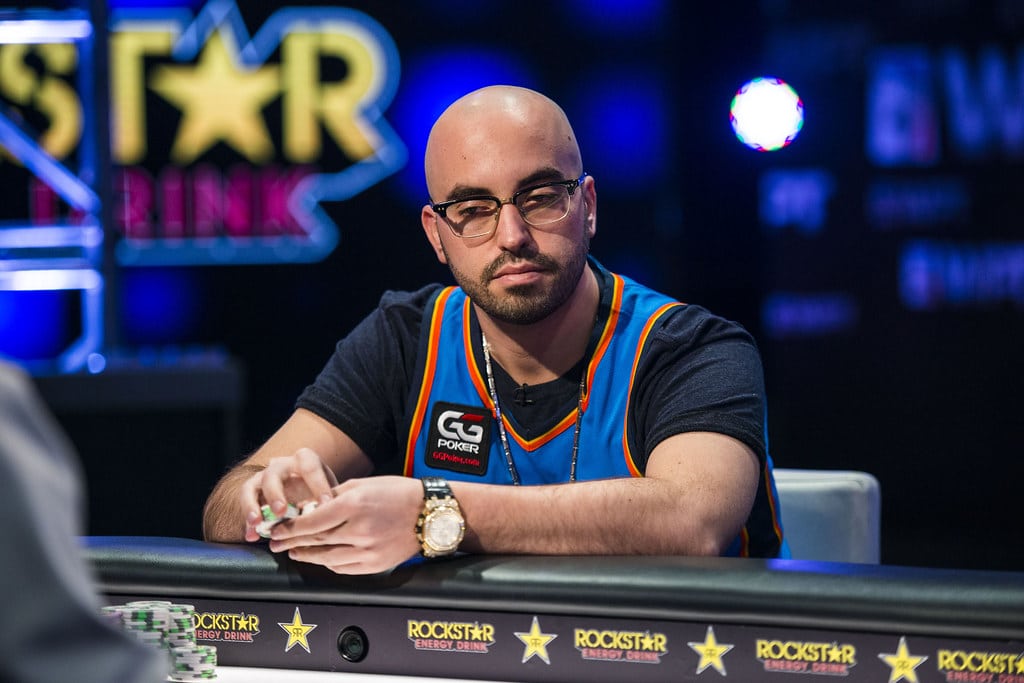
Bryn Kenney has built one of the most successful live tournament careers in poker history, but his view of the game is far from mechanical. For him, poker is not only about charts, fixed patterns or repeating approved lines. He sees it as a creative process.
The all time live tournament earnings leader has passed $90 million in recorded winnings, yet he still describes poker in artistic terms. When he receives two cards, he does not only see ranges and numbers. He sees a chance to build something through timing, pressure, sizing and instinct.
Kenney has said that poker feels like an art form to him. In his view, every check, bet, raise and decision becomes part of a larger picture. He compares the game to creating a piece of music or a visual work, only the tools are two cards, chips and the felt.
At BC Poker, we find that approach especially interesting because it shows a side of poker that numbers alone cannot fully explain. Strategy matters, but elite players often separate themselves through imagination, confidence and the ability to see lines that others do not consider.
Kenney believes many players become locked into one idea of how poker is supposed to be played. His own style is different. He prefers to think beyond standard patterns and create a game that feels natural to him. That mindset has helped him stay at the top for years.
Poker gave Kenney a place where he felt understood
Kenney’s connection with poker goes beyond money and trophies. He has spoken about feeling different from people around him while growing up, especially during high school. For him, poker became a place where that difference felt less isolating.
He has described the poker world as a community full of unusual thinkers. Many of the best players, in his view, are strong problem solvers who do not simply follow the path expected of them. That is part of what makes the game attractive to people who see the world in a different way.
Kenney has said that ordinary life often pushes people to fit into a system. Poker, by contrast, rewards those who can think independently. It gives players space to make unconventional choices, test ideas and build their own way of competing. That is one reason he still enjoys the game after reaching the top of the earnings list. The competition is important, but so is the environment. Poker allows him to spend time with people from around the world who understand the same type of pressure, humor and mental challenge.
For Kenney, the table is not only a place to win chips. It is also a place where he feels closer to people who think like him. That sense of belonging remains one of the things he values most.
Kenney does not want poker reduced to study alone
Modern poker is often discussed through technical language. Solvers, game theory and balanced strategies have become major parts of high level training. Kenney respects skill, but he does not want the game to lose its creative side.
He has said that if he were starting poker in 2026 and heard only that a player must study strict theory to win, he might not have been interested. His reaction is simple: he does not want to study in that way.
That does not mean Kenney rejects hard work. His point is that poker can be mastered through more than one path. Some players may build strong tight strategies. Others may lean into pressure, aggression or unusual timing. The best approach depends on the player’s own mind and strengths.
Kenney believes a player can build a world class style in different ways. The important part is to understand oneself, keep improving and find a version of the game that feels alive rather than forced.
This is where his view of poker becomes most personal. He does not see creativity as decoration around strategy. He sees creativity as part of strategy itself. The decisions that look strange to others can become powerful when they are backed by experience, timing and a clear read of the situation.
A summer of near misses still showed his level
Kenney recently closed another strong summer of live poker with two major near misses in high roller events. He finished third in a $50,000 event and second in a $250,000 event, earning close to $4 million across those two results.
Those finishes did not add another trophy to his record, but they reinforced why he remains one of the most dangerous tournament players in the world. Even after years at the top, he continues to compete deep in the biggest buy in fields.
For many players, such results would define a career period. For Kenney, they are another chapter in a long run of high pressure performances against elite opponents.
His style may not fit the cleanest textbook model, but the results are difficult to ignore. He has reached the top of poker by trusting his instincts, shaping hands creatively and finding edges that do not always appear in standard discussion.
At BC Poker, we see Kenney’s story as a reminder that poker is not only a technical contest. It is also a test of personality, courage and identity. Study can sharpen a player, but the best version of a player’s game often comes from knowing how they think and why they make decisions under pressure.
Kenney’s message is about finding your own game
The biggest idea in Kenney’s approach is not that every player should copy him. It is the opposite. His career shows the value of building a style that fits the player rather than forcing every decision into someone else’s model.
Poker offers space for many winning identities. A player can be patient, aggressive, mathematical, intuitive or a mix of several traits. What matters is turning those traits into a clear and disciplined strategy.
Kenney’s success shows how far a creative approach can go when paired with experience and confidence. More than $90 million in live tournament winnings did not come from random decisions. It came from years of reading people, taking pressure spots and trusting a personal view of the game.
For new and developing players, the lesson is not to avoid learning. The lesson is to avoid becoming passive in the way they learn. Charts and theory can help, but they should support a player’s thinking, not replace it completely.
Kenney still treats poker as a place for expression. That may be why, after all the titles, prize money and long sessions, the game continues to hold his attention.